
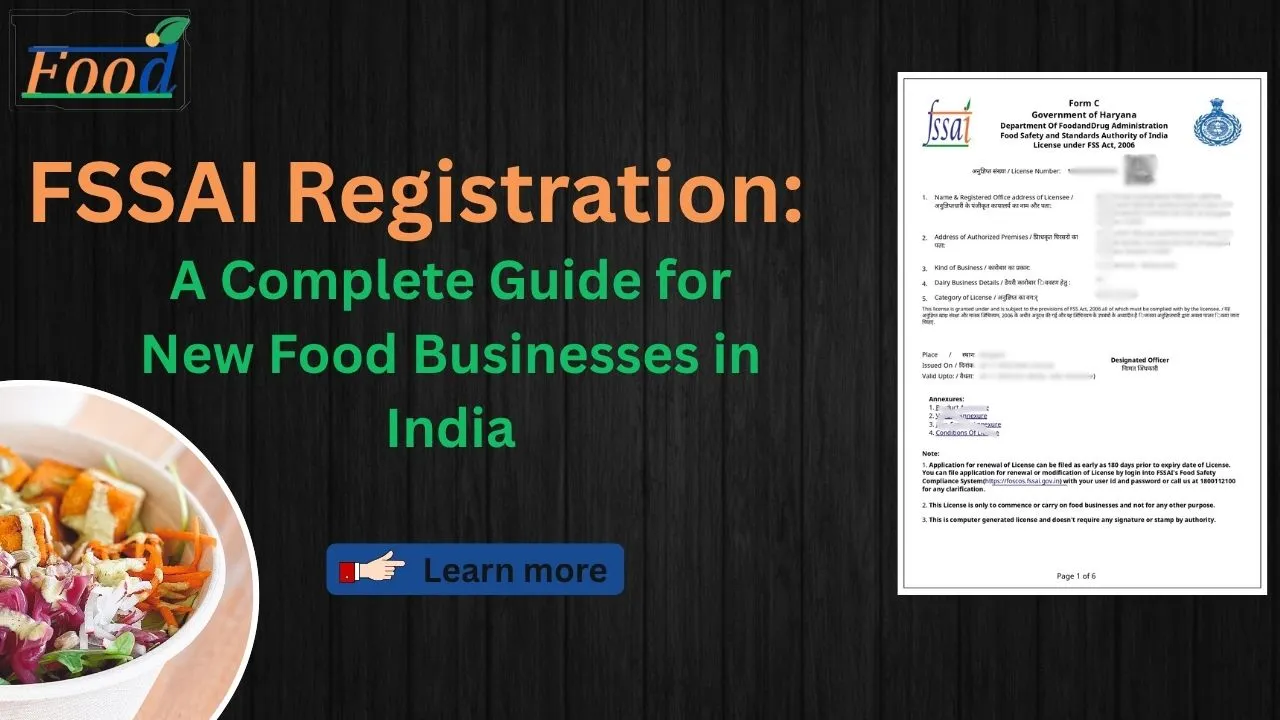
Opening a food business in India is not just about making good-quality products and selling them. Every FBO is responsible for taking all precautions to make certain that the food it produces/manufactures/imports/stores/distributes is safe, hygienic and complies with the prescribed requirements. Acquisition of the appropriate FSSAI registration or license, as the need may be, is among the initial steps for regulatory compliance.
FSSAI license registration allows the food unit to function within a knit food safety environment. It also builds education, trust, and goodwill between producers and consumers as they strive to meet common food safety and regulatory obligations.
This article tells you everything you need to know about FSSAI registration – what it is, who needs it, how to apply, documents required, and much more for new food businesses.
What is FSSAI Registration?
FSSAI Registration is the basic level of registration issued to eligible Food Business Operators (FBOs) under the applicable provisions of the Food Safety and Standards regulatory framework. It is intended for food businesses that fall within the prescribed eligibility criteria.
Why is FSSAI Registration Important?
Obtaining the appropriate FSSAI registration or licence offers several benefits for food businesses, including:
Meeting relevant food safety requirements helps create a safer food system for both consumers and business operators.
Who Should Apply for FSSAI Registration?
Depending on the applicable eligibility criteria, FSSAI registration may be relevant for various food business operators, including:
- →Home-based food businesses
- →Small food manufacturers
- →Petty retailers
- →Street food vendors
- →Temporary food stall operators
- →Small storage units
- →Food transporters
- →Small distributors
- →Local food processors
- →Cottage food businesses
Documents Commonly Required
While documentation requirements may vary depending on the type of application, applicants are generally required to provide:
Applicants should ensure that all information submitted is accurate and complete.
Steps to Apply for FSSAI Registration
In general, the registration process involves the following steps:
Responsibilities After Registration
Obtaining registration is only the beginning of regulatory compliance. Food businesses should continue to:
- Maintain hygienic food handling practices
- Follow applicable food safety requirements
- Maintain required business records
- Ensure product quality and safety
- Cooperate during inspections, where applicable
- Display registration or licence details as required
- Request renewal or alteration as required
Routine inspections help ensure consumer confidence and responsible business practices.
Common Mistakes to Avoid
New food businesses can reduce delays by avoiding common errors such as:
Reviewing all application details before submission can help ensure smoother processing.
Best Practices for New Food Businesses
Food business operators can apply the following practices to enhance compliance:
- →Train staff in food hygiene
- →Clean production and storage areas regularly
- →Obtain raw materials from trusted suppliers
- →Record food-related activities
- →Adhere to a cleaning and sanitation regimen
- →Observe proper storage of foodstuffs
- →Promote a learning attitude and food safety culture at all levels of the organisation
These practices result in more uniform food quality and better consumer protection.
Conclusion
The FSSAI license or registration is the first milestone in building a lawful, accountable food business. With the right knowledge, an accurate business profile, and by observing high standards of food safety, food business operators can help ensure a safer food environment and grow consumer confidence.
New food businesses are advised to adequately evaluate the appropriate registration or licensing profile before submitting an application, and thereafter to comply with food safety requirements for the term of their business.