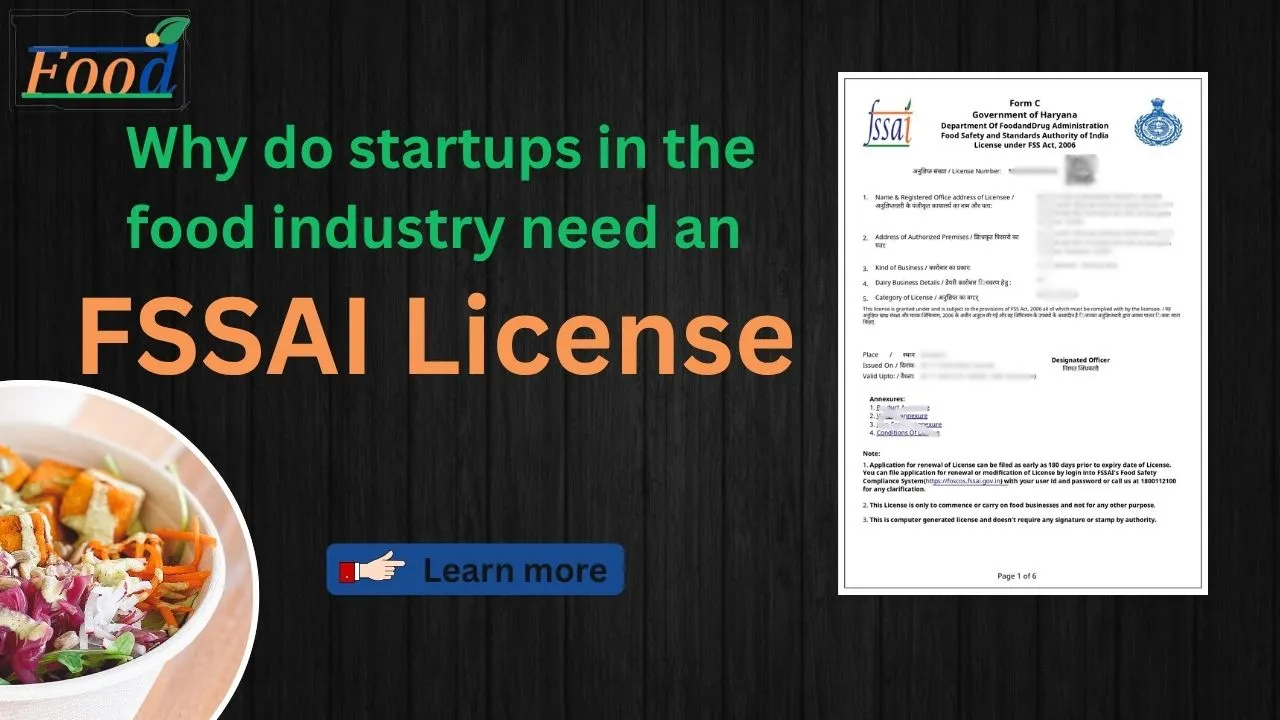
The Indian food industry market is expanding at a fast rate. With India heading towards Digital India, new startups,
restaurants, cloud kitchens, packaged food, and home delivery businesses are emerging at a fast pace. If you are planning
to launch a new food-related business startup, the first question that comes to mind is, "Do I need to get an FSSAI license
for a food business?"
Startups tend to believe they won't require an FSSAI license at first, but in fact, an FSSAI license is a regulatory requirement. It also serves as proof of priority and credibility to the business.
In this section, let's get to know why an FSSAI license is so crucial and what advantages it can give to startups.
What is an FSSAI license?
FSSAI is an acronym for the Food Safety and Standards Authority of India. FSSAI is a Government of India regulatory body for the food safety and quality of the country. As a manufacturer, packer, seller, or supplier of food, you will have to hold an FSSAI license. This license indicates that your company maintains food quality and safety standards.
Why does a startup need an FSSAI license?
It is compulsory to possess an FSSAI license to operate a food business in India. Without this license, your business startup may be taken to court or fined. Such unlicensed businesses are usually sealed.
It is compulsory to possess an FSSAI license to operate a food business in India. Without this license, your business startup may be taken to court or fined. Such unlicensed businesses are usually sealed.
The customers today are very aware. When they see that your restaurant or product has an FSSAI license, they know that your food is safe and of higher quality. This is the easiest way through which startups can establish brand value.
Startups need funds. Investors invest in those businesses that follow legal guidelines. Obtaining an FSSAI license makes your business more reliable and susceptible to raising funds.
The food business is highly competitive. When you are licensed and delivering safe, quality-standard products, customers will opt for you.
If you wish to sell food on platforms such as Zomato, Swiggy, Amazon Pantry, or Flipkart Grocery, you must have an FSSAI license. Otherwise, you cannot do business on these sites.
Benefits for Startups
- -> Brand Value and Trust:A license puts your brand in good faith and trustworthiness. It establishes your company in good faith with customers as well as partners.
- -> Legal Protection: With a license, you have no fear of government inspection and investigation. You are totally legally covered.
- -> Easy Expansion: During business expansion and desiring to open new branches or expand the business into other cities, FSSAI licensing proves useful.
- -> Quality Improvement: FSSAI applies standards periodically. FSSAI-licensed startups must adhere to these standards, hence the quality and customer satisfaction improvement.
FSSAI License Types
Startups should also understand that there are three kinds of FSSAI licenses:
Startups can opt for any one of these licenses depending on their requirements and business size.
Documents Required for an FSSAI License
There are certain documents required by startups while applying for an FSSAI license, which include:
- 01 Aadhaar Card/PAN Card
- 02 Proof of Business Address
- 03 Food Product Details
- 04 Certificate of Business Registration (like Private Limited, LLP, or MSME)
- 05 Passport-Size Photo
- 06 Other Documents as Applicable (based on the type of business)
How can you register on the FSSAI registration portal to obtain a food license certificate?
The government has made the procedure of FSSAI renewal easier through the online portal. Read these instructions:
What if you do not obtain a license?
While applying for FSSAI renewal, a lot of firms commit minor mistakes, which cause delays in processing. These are common mistakes:
Making sure your application is accurate will help you avoid delays.
Conclusion
If you're starting a startup in the food sector, an FSSAI license is not a choice but a requirement. It gives your company legal safety, enhances customer trust, and enhances your market standing. Startups have to go in the correct direction at the initial stage. Therefore, if you have not applied for the FSSAI license yet, apply now and make your business a successful and safe one.
The Indian food industry market is expanding at a fast rate. With India heading towards Digital India, new startups, restaurants, cloud kitchens, packaged food, and home delivery businesses are emerging at a fast pace. If you are planning to launch a new food-related business startup, the first question that comes to mind is, "Do I need to get an FSSAI license for a food business?"
Startups tend to believe they won't require an FSSAI license at first, but in fact, an FSSAI license is a regulatory requirement. It also serves as proof of priority and credibility to the business.
In this section, let's get to know why an FSSAI license is so crucial and what advantages it can give to startups.