
India is a country that has a massive population of over a billion people. The problem for this huge population is how to provide safe, clean, and good-quality food. A body like the Food Safety and Standards Authority of India (FSSAI) is indispensable in such a diverse country in terms of food habits, production scales, and supply chains. Whether you are a home-based bakery or a food manufacturing unit that is spread across the country, getting an FSSAI registration or license is not just a mere formality—it is a legal and moral obligation. People nowadays want more and more transparency in their food. They want to be sure that the food is clean, safe, and meets the set national standards. FSSAI is the organization that saves the day; it is India’s food safety guardian and, therefore, very instrumental in ensuring the country's food security.
FSSAI is undoubtedly the one that holds the most credit for the food safety scene, as it is the institution that is responsible for regulating, supervising, and promoting safe food practices. The main goal of its standards is to lessen the risks of contamination of food, adulteration, poor hygiene, and unsafe handling. Without such a framework, customers could find themselves at a higher risk of foodborne diseases and inferior products.
Every food business operator (FBO)—small or large—must obtain an FSSAI registration or license based on their scale of operations. This includes manufacturers, distributors, transporters, marketers, retailers, caterers, cloud kitchens, and even small roadside vendors.
Here’s why FSSAI registration is non-negotiable:

The FSSAI system is designed to encourage businesses to adopt scientific methods of food handling, to maintain hygiene, and to take measures to eliminate the chances of contamination. Hence, product quality is increased indirectly.

5. Support for Small Businesses
Small vendors and startups can also comfortably go through the process of applying for FSSAI registration. It is quite simple, affordable, and designed to help local businesses develop in a responsible way.
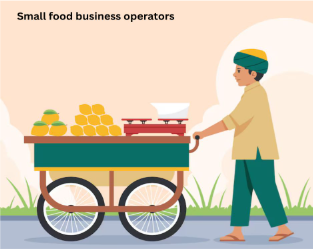
While small-scale businesses are covered by registration, medium and large companies are required to obtain a state or central FSSAI license. These licenses are a way of ensuring that food production is done in line with strict safety protocols
Food security is not just about having enough food—it is about having safe and nutritious food for all. FSSAI contributes by:
Many businesses make the mistake of assuming that once they receive their license, the job is done. In reality, FSSAI renewal is equally important. An expired license is treated as a noncompliant license, which can again attract penalties or business disruption.
Renewing your FSSAI license ensures:
Timely renewal shows commitment to hygiene, responsibility, and consumer well-being.
FSSAI is the central core of the Indian food safety system. From getting FSSAI registration in the case of a home business to keeping the FSSAI license with a renewal in the case of a large manufacturer, it is necessary for any food business. It not only guards the customers but also increases the trustworthiness of the brand and guarantees the supply of food that conforms to the national safety standards. Trust is the most valuable thing in a fast-expanding food industry. And FSSAI is the main trust builder—through every safe bite.